People shopping for homes look for many types of information — schools, commute times, neighborhood details and potential exposure to natural hazards. To address the latter, Zillow includes climate-related data from a third-party provider, First Street, on listing pages.
Buyers and homeowners want reliable information to help them make confident decisions, and we aim to provide clear, transparent details as they navigate one of life’s biggest financial choices. We recently updated how our climate-related data shows up so you can now see all the information in context versus just a simple score.
What changed
Zillow previously displayed climate risk scores, such as flood, fire, heat, wind and air-quality risk, directly on listing pages. These scores are provided by First Street, a third-party research organization, and they remain available to consumers today.
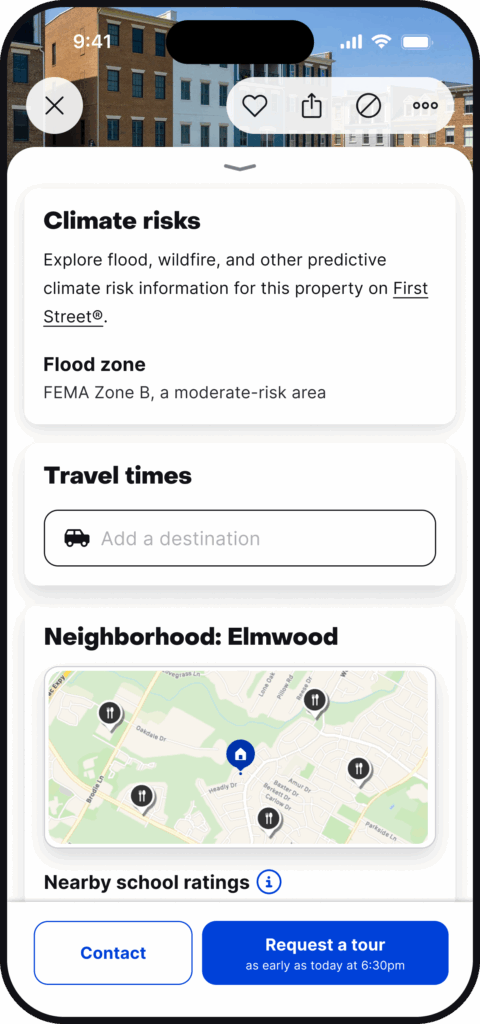
Under the updated experience, the climate risk section still appears on the home details page. However, instead of showing numerical risk scores directly on Zillow, the section now links to First Street’s website, where consumers can go and view the same property-level information.This modification affects the presentation of the data, not its availability. Consumers can still review the same climate risk assessments at no cost through First Street’s site.
Here’s what remains unchanged
- A climate risk section still appears on for-sale listings on Zillow.
- Home shoppers can also turn on a climate risk layer in Zillow’s map view to explore flood, wildfire, wind, heat and air-quality risks for a given area.
- Consumers can still view a property’s specific climate risk scores for free by clicking the link in the module, which takes them directly to that property’s page on First Street’s website.
- FEMA flood zone information continues to appear directly on for-sale listings on Zillow.
Looking ahead
Zillow is constantly launching and iterating products based on customer feedback, engagement, local rules and more. As such, climate information will continue to evolve, and so will the tools and experiences we build to help consumers access reliable insights.
While this update reflects local rules, our commitment to clarity and consumer access to information remains unchanged. This update ensures consumers continue to have access to important information to help them consider factors such as insurance, repair costs, and long-term homeownership planning, while maintaining a consistent experience across Zillow.