Searching for a rental doesn’t look like it did even a few years ago. Renters are browsing more places, comparing more options and expecting answers faster.
With insight into how millions of renters search and decide, Zillow Rentals is intentionally evolving the experience to match that reality, making it easier to find the right homes, understand what sets them apart and take the next step with confidence.
This work is focused on three key moments in the renter journey: discovery, differentiation and engagement, in order to enable renters to go from “maybe” to “this is the one” with less friction.
Discovery: Helping renters find more relevant options across more touchpoints
Renters don’t follow a single, linear path. On Zillow’s scale, we consistently see renters browsing search results, scanning maps, saving and revisiting listings, and increasingly discovering properties through AI-powered experiences like ChatGPT.
This shift toward faster, multichannel searches is also clear in our data. According to Zillow’s 2026 Consumer Housing Trends Report (CHTR), a large majority of renters searched on a mobile website (81%) or app (73%), and the typical renter used five different sites or apps during their search. When renters are scanning the market that broadly, relevance matters.
We’re building for how renters actually search today, bringing up apartment results based on what they’re looking for and how they browse. That means helping renters spend less time sifting through everything and more time discovering properties that are relevant to them.
For apartment buildings that invest in richer listings, we’ve created enhanced visuals on our search maps to make them easier to notice and compare as renters explore specific neighborhoods.
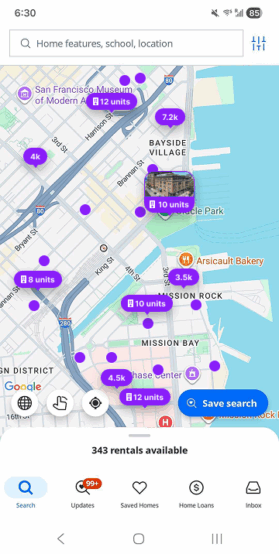
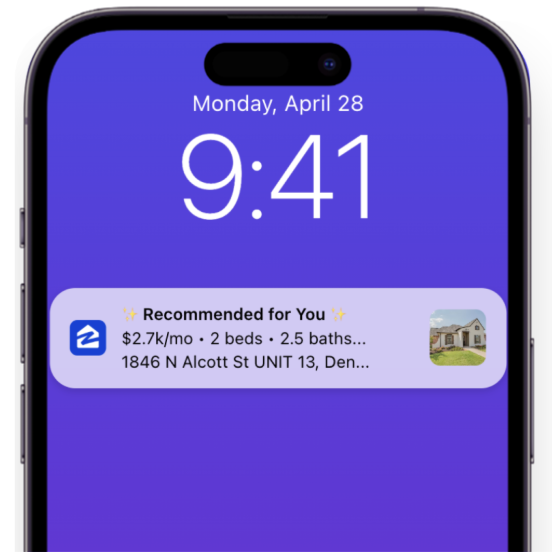
Why this matters for renters: Better discovery means less noise and more relevance, especially in competitive markets where great apartments get snapped up quickly.
Differentiation: Making ‘What’s special here?’ obvious earlier
Once renters narrow down their options, comparison becomes the hardest part of the process. Many buildings and apartment units look similar at a glance, forcing renters to click into multiple listings, open more tabs and do extra guesswork.
That friction matters because amenities and building details play a huge role in decision-making. According to the CHTR report, 39% of renters say that common building amenities (e.g., gym, business center, rooftop, lounge) are essential when deciding where to rent — up from 33% the previous year.
Instead of clicking into five similar listings just to find out which ones have a gym or in-unit laundry, renters should be able to spot those differences earlier and rule options in or out faster. To help bring those amenities and special details to light, we’ve built comparison experiences to bring the most relevant property details forward earlier in the search. We now highlight the details that renters care about — such as standout amenities, up-to-date availability details and recent listing updates — so it’s easier to understand what sets one option apart from another.
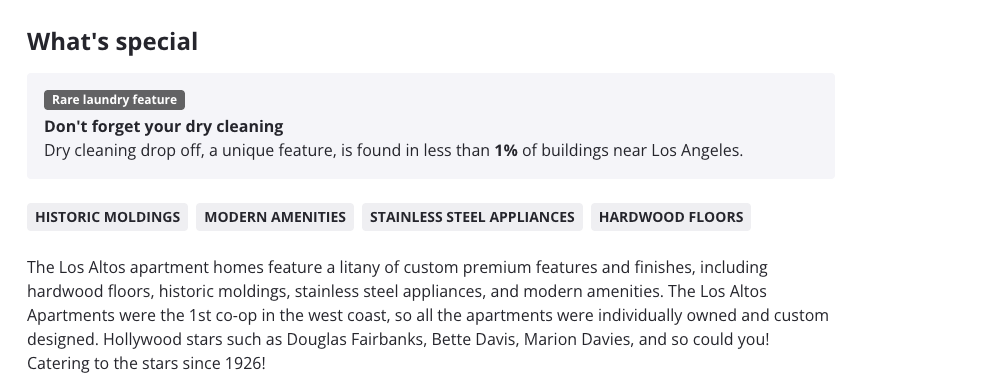
Why this matters for renters: Better comparisons mean fewer dead ends. Instead of scrolling past listings that could be a fit (but don’t provide enough details), renters can quickly spot what aligns with their needs and lifestyle.
Engagement: Reducing the ‘I’m interested. Now what?” drop-off
Even after renters find a home they like, the path forward isn’t always obvious. When contact options are hard to find or next steps aren’t clear, momentum can stall.
We’ve designed an improved listing experience that makes it easier for a renter to take action, with more prominent contact options down to the unit level. And because visualization helps renters decide, we’ve introduced AI-powered Virtual Staging for apartment buildings that choose enhanced visual experiences, helping renters picture what an empty space could feel like as a home.
That investment is grounded in renter feedback: 33% of recent renters say virtual staging is essential, and 57% consider at least one advanced digital media feature (e.g., drone capture, virtual staging, interactive 3D tours) essential when deciding where to rent, according to our CHTR report.
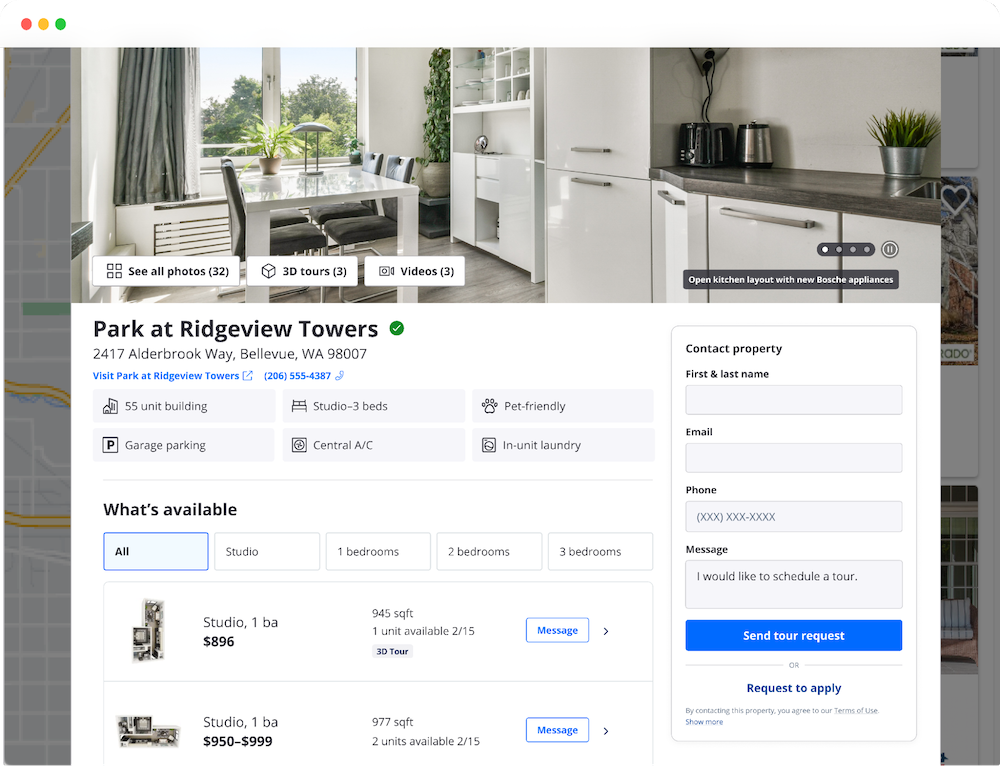
Why this matters for renters: When the path from interest to action is clear-cut and straightforward, renters can move faster and properties can connect with more serious, better-informed prospects.
As renters continue to move faster and expect more clarity, we’ll keep using data, feedback and real-world behavior to guide how Zillow Rentals evolves. These updates are part of an ongoing effort to design an experience based on how renters actually search today and built to help them make decisions more easily.
Because when renters can decide with confidence, the entire rental ecosystem works better.